

How To Draw Equally Straight Lines In A Circle
Using only a circle and straight lines, information technology's possible to create diverse artful curves that combine both art and mathematics. The geometry backside the concentric circle, ellipse, and cardioid dates back centuries and is easily institute in the world around us. From an archery target to an apple, can you lot proper name these geometric shapes?
You will past the terminate of this step-by-pace tutorial, and you'll also be fix to try your manus at some geometric art yourself, which yous could so spin into op art or string art. To create the curve examples that follow, I used a pencil, ruler, and protractor to mark off degrees and keep things exact. If you want, you could even use the gratis reckoner program GeoGebra to draw concentric circles, ellipses, and cardioids.
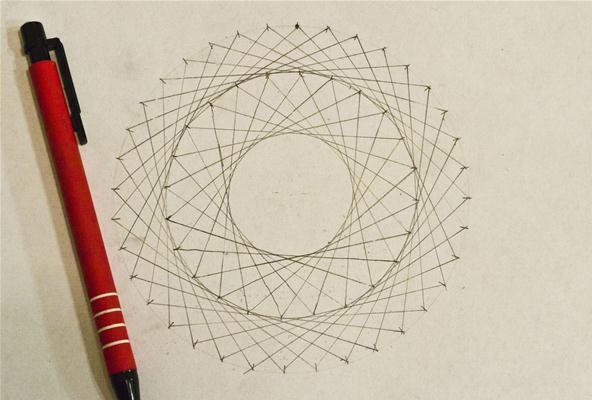
Materials & Tools Needed
For all of these curves, we'll demand a few bones geometry tools and cartoon utensils.
- paper
- ruler or straight border
- pen or pencil
- compass for drawing circles (or images of circles or regular polygons)
- protractor (for marking off precise degrees)
Option 1. Making Concentric Circles
Concentric circles are circles that share a midpoint, such every bit an archery target or a dartboard. The circles, though different size, all take the same bullseye. Regular polygons, regular polyhedra, and spheres tin also be described as concentric as they all share the same middle. In fact, in our start case below, we create a concentric circle by cartoon polygons:
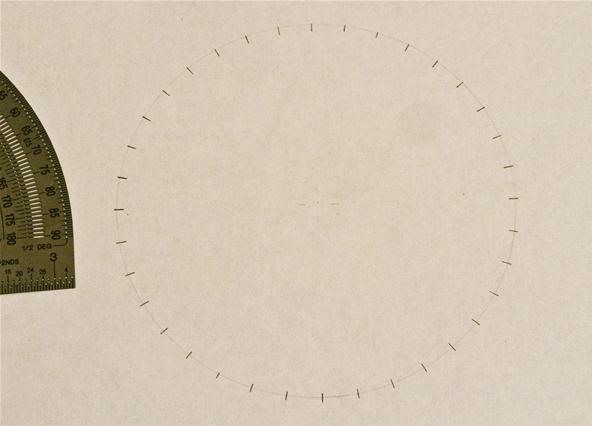
Step ane: Mark a Circle at Even Intervals
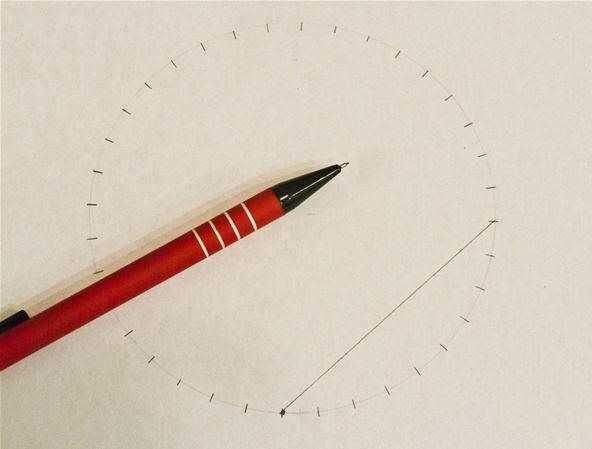
This circumvolve is marked every 10 degrees, so 36 marks total:
Pace ii: Connect I Marker to Another
The number of marks skipped will determine the size of the concentric circle created. I chose to skip viii:
Step 3: Create Lines All the Way Effectually the Circumvolve
Take the next mark and connect it to the marking ahead of the ane you connected the previous ane to. Continue doing this.
Based on your showtime marking, accept the side by side mark and connect it to the mark alee of the one you connected the previous ane to, then proceed doing this:
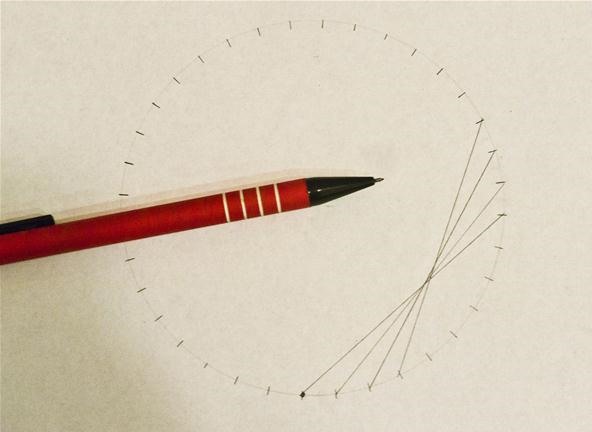
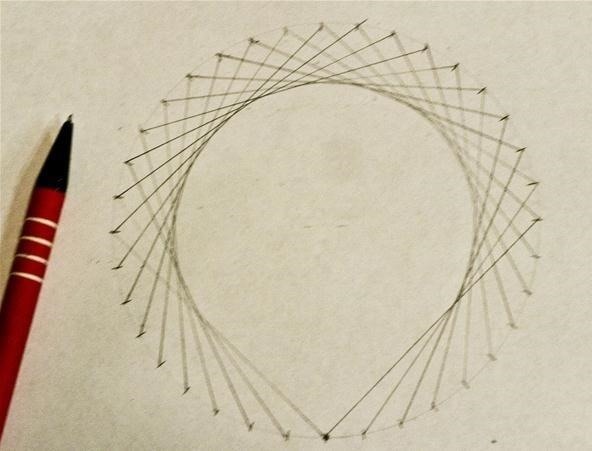
The resultant polygon has the aforementioned number of sides as there were marks on the original circle:
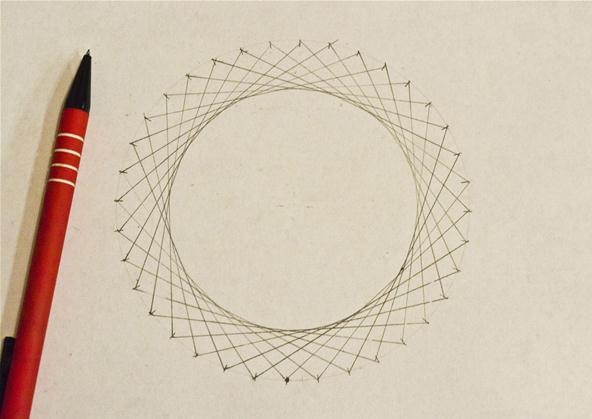
Y'all tin can and then apply the within circle as a starting signal for creating another circle:
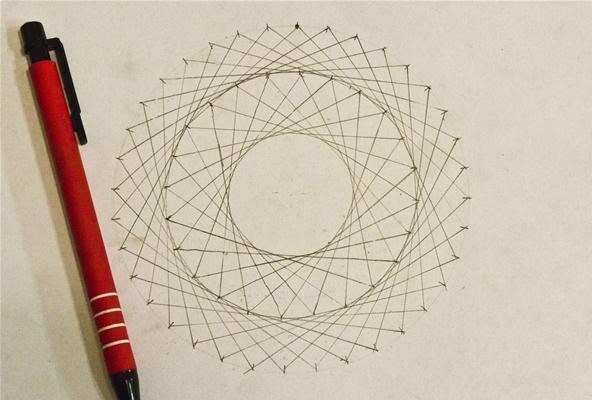
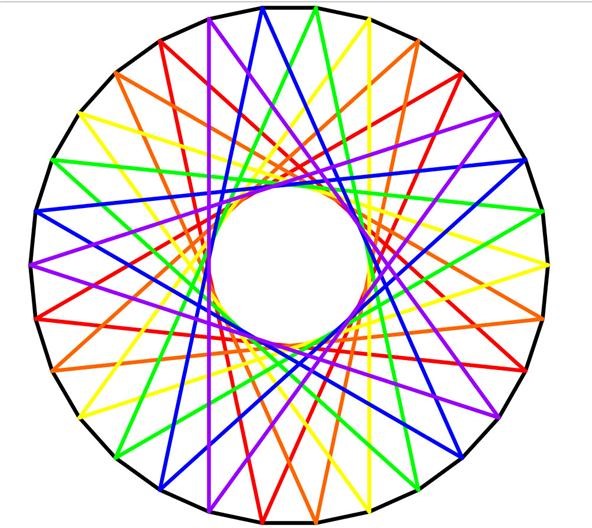
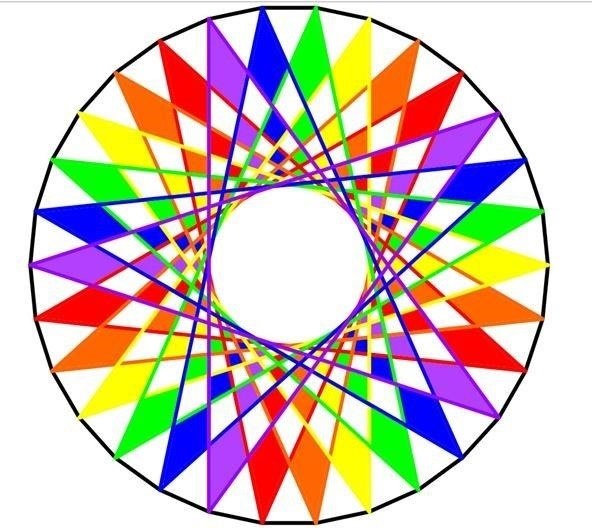
These concentric circle designs are actually creating star polygons, as discussed in the posts on creating star designs on pumpkins and creating torus knots. In the image beneath, using GeoGebra (Archetype), I took a circle with xxx marks and connected them in a design with six pentagrams. This works because thirty / 5 = half dozen:
Pick 2. Making Ellipses
Like the Earth'due south orbit around the Sun, an ellipse is a "airtight curved shape that is flat" and all-time described as an oval. This squashed circle has two focal points, where "the sum of the distances to the foci is constant for every bespeak on the bend."
Step ane: Mark Off a Circumvolve past Degrees
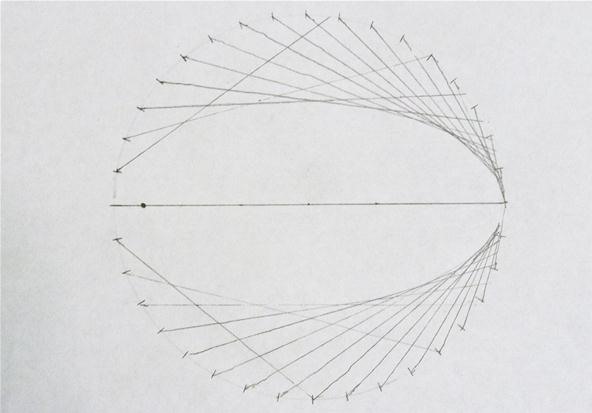
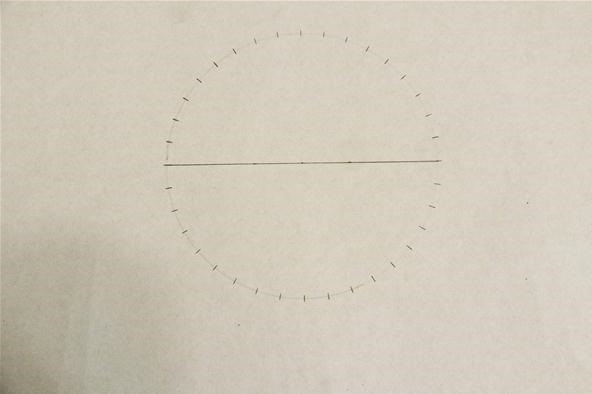
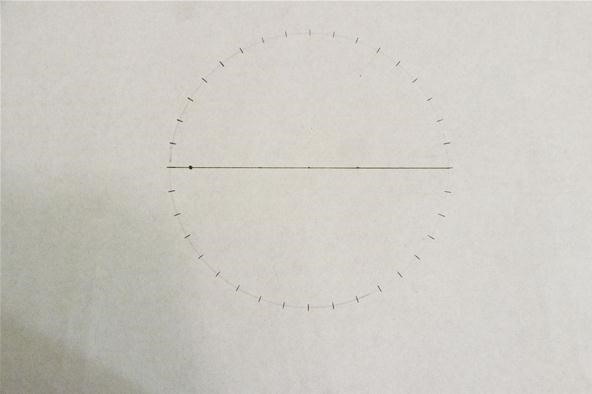
There are lots of ways to create ellipses, but this one is pretty fun. Start with a circumvolve with a number of evenly spaced marks; I again chose 10 degrees. I and then connected two of the marks that were 180 degrees apart, halving the circumvolve. This line will become the major centrality:
Pace 2: Choose a Point on the Major Axis
Mark a point on your major axis. Making this signal farther from the center of the circle makes the ellipse longer and narrower.
Stride 3: Draw a Line from the Focal Indicate
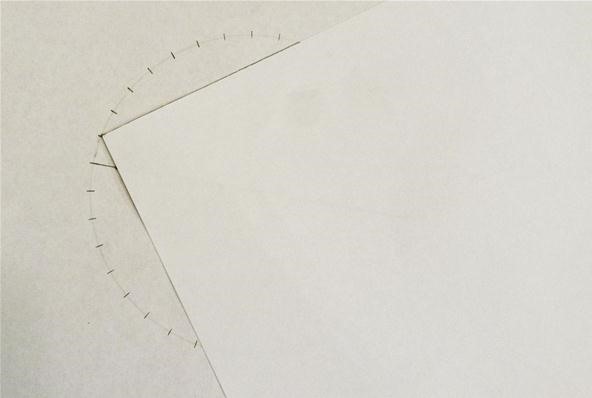
Make a right angle on i of the marks on the circle so that one of the sides of the angle goes through the focus. Connect the line from the mark to where it intersects the circle. Continue this procedure for all of the marks on the circle:
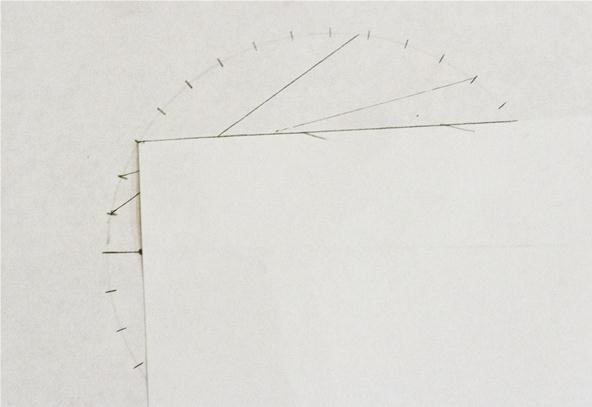
Halfway washed; the resolution increases as it gets further from the focus:
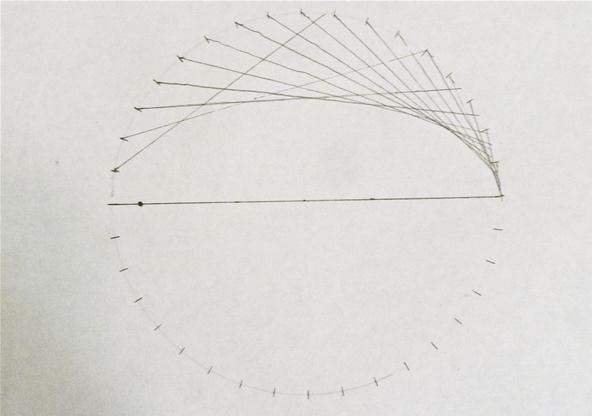
And here is the completed ellipse. Note yous could improve the resolution nigh the focus by repeating the process using the focus on the other side:
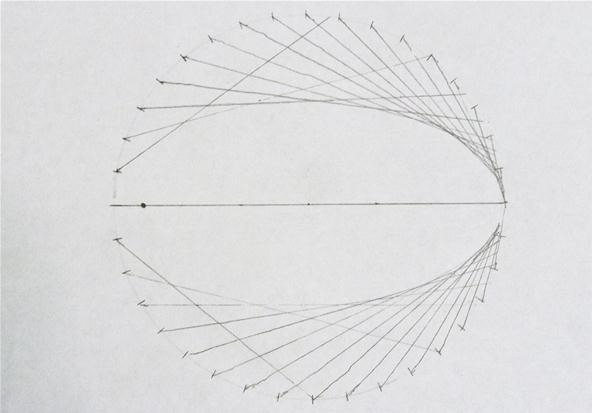
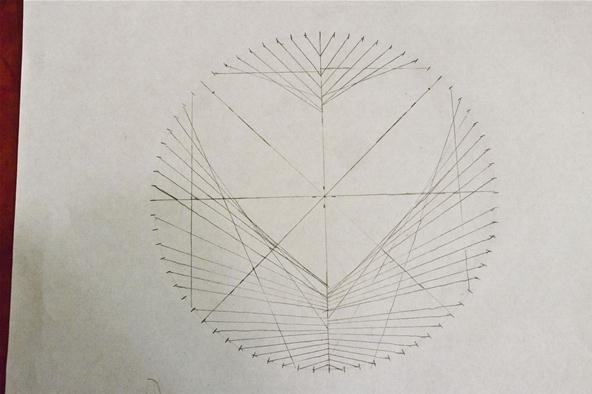
From the ellipse, I went a pace further and intersected two ellipses at correct angles. The effect was the following heart shape, a pattern that brought me to mind the curve in mathematics that is known for its middle-similar shape, the cardioid, which will embrace next.
Option iii. Making Cardioids
A cardioid is formed by a rolling circle'south path across the circumference of some other circle, all the while keeping its radius the same. The term, kickoff used in 1741 by Giovanni de Castillon (in Philosophical Transactions of the Royal Society, 1741), originates from the Greek word for "heart." An everyday object that holds a true cardioid shape? An apple.
Step 1: Marker a Circle'due south Circumference Evenly
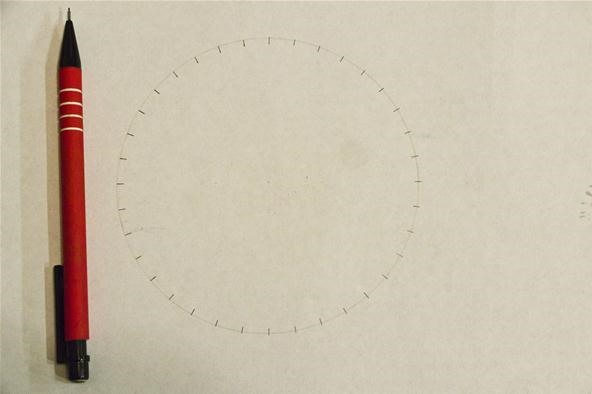
To create a cardioid, showtime with a circle with a number of evenly spaced marks; I chose every 10 degrees on this 1 yet again:
Step 2: Skip Alee past 2 Marks
Starting with any one marker, connect a line from information technology to a mark that is two marks away:
Step 3: Count by Ones & Twos
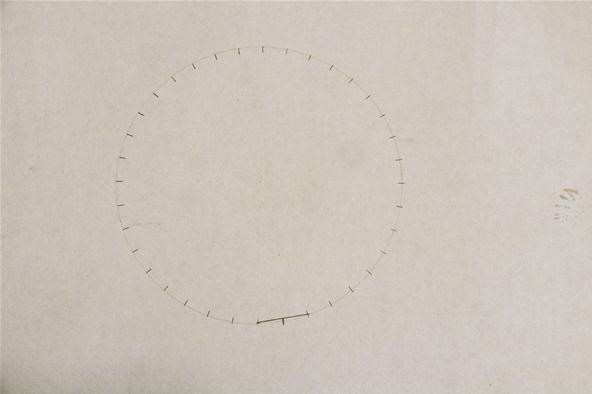
Have the next mark after your starting point and connect it to the marker that is two beyond the ending point of the terminal mark.
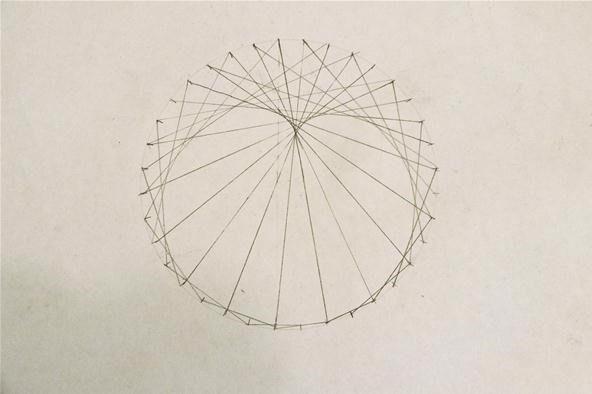
Take the next mark after your starting point and connect information technology to the mark that is two across the ending indicate of the last mark. Repeat. You are basically counting past ones on the starting points, and by twos on the catastrophe points. Continue going and you'll begin to see the curve take shape:
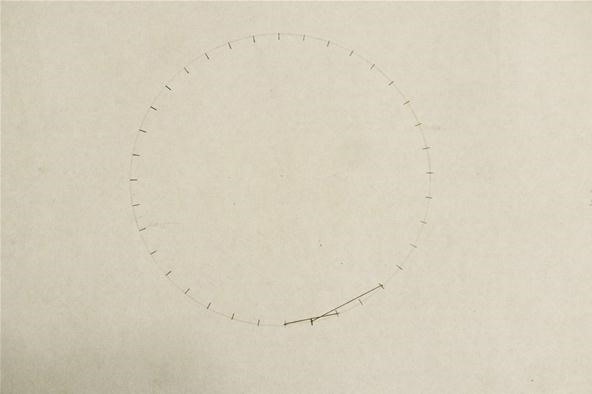
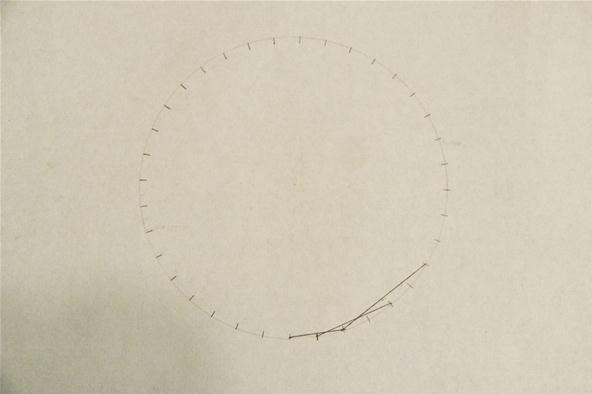
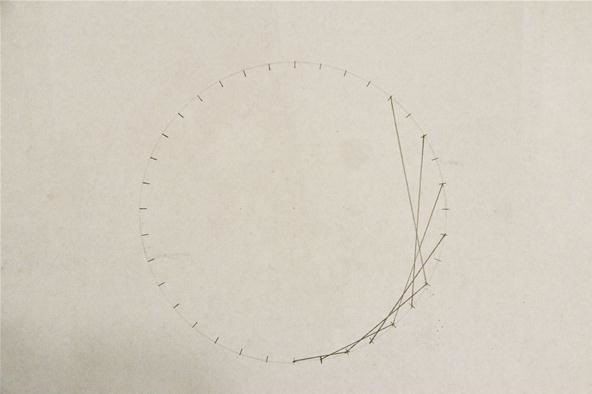
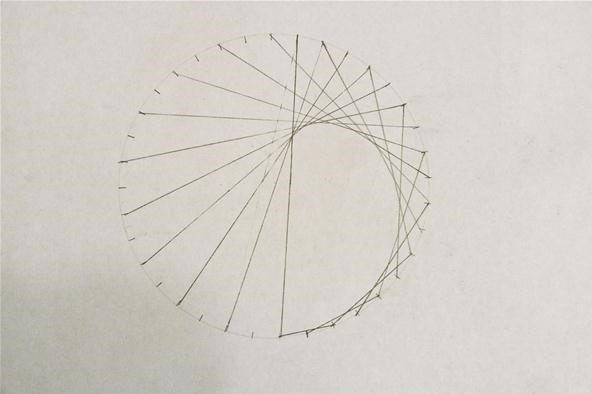
Step iv: Go along on Other Side
To avoid confusion, simply focus on the marking you lot're working on: counting by ones for the starting point and by twos for the catastrophe betoken:
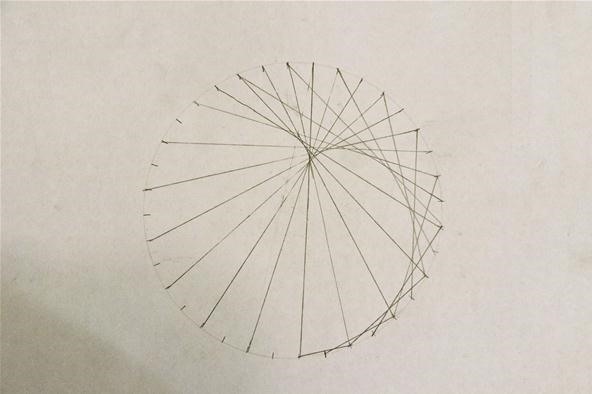
Step 5: End at Original Starting Indicate
You'll see the heart take shape once you get completely around; stop once you lot return to the first mark. My completed cardioid:
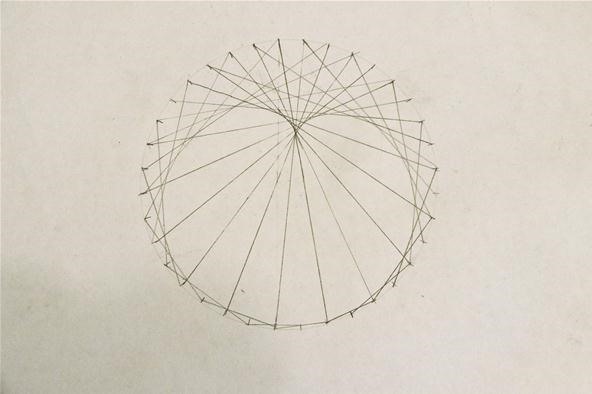
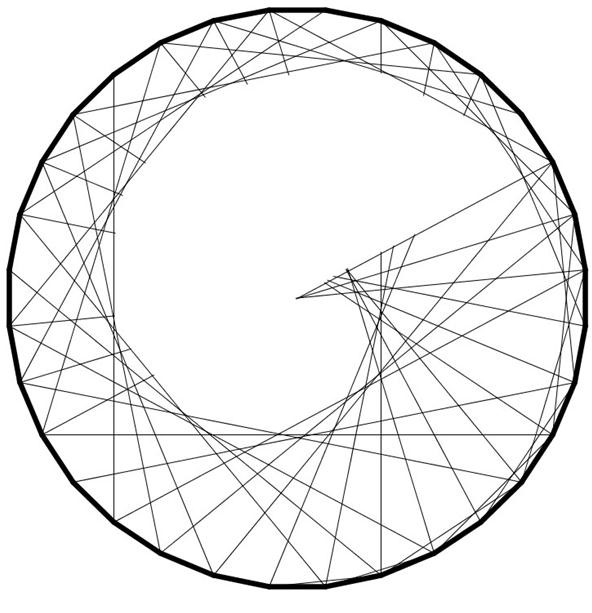
You lot can follow this same process only by counting past threes on the ending marks or fours and you will get more sharp points. If you skip less often, y'all volition become a more gradual spiral. The curve below was generated by counting past twos but every fourth time.
Choice 4. Combine Curves & Create a Eye
Inspired, I decided to endeavour and design a curve that looks more similar a heart past combining linear sections, concentric circle sections, and cardioid sections. I remember the final design looks pretty good. What do you call up?
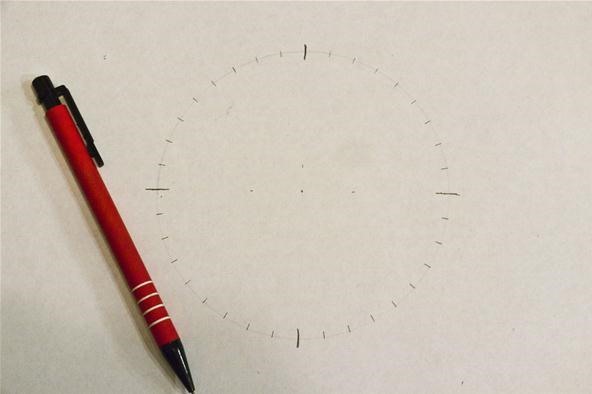
Footstep one: Mark a Circumvolve into Fours
To start, you again mark a circle evenly. I chose once more 36 marks. I also fabricated the marks at 90 degree intervals more visible; these volition exist important markers:
Step ii: Form the Center'due south Signal
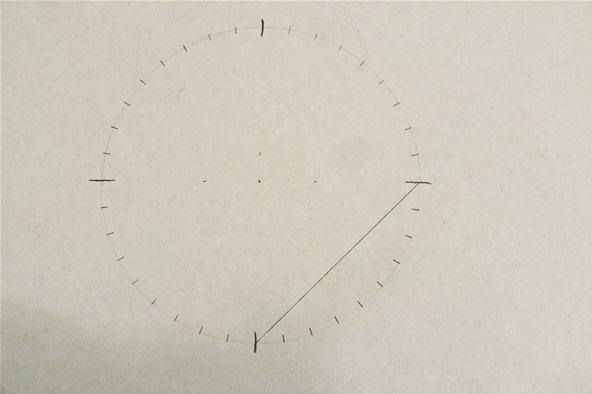
From the bottom, draw a line betwixt ii of the marks at 90-degree intervals. This volition become part of the pointy finish of the heart:
Footstep 3: Describe Lines for a Concentric Circle
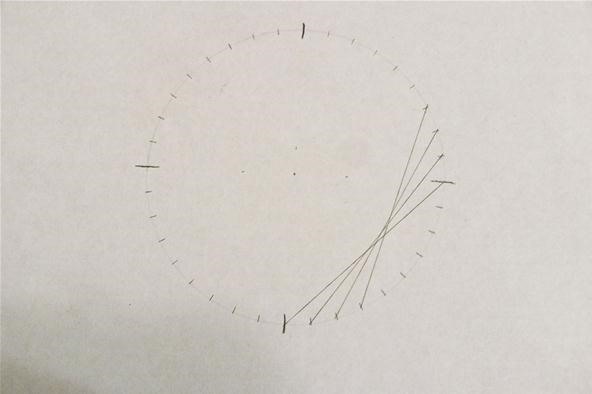
Connect the next marks as if you were making the concentric circumvolve design. Stop when you become to the line that connects to the bespeak 180 degrees from the starting bespeak. Yous could practise the aforementioned on the other side. You might not want to do this until you are completely done.
Step iv: Repeat Procedure on Other Side
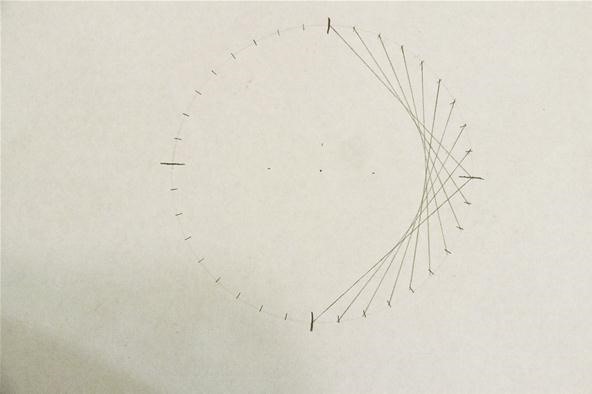
Though we go ahead and complete the concentric-circle pattern for the opposite side, you can choose to expect until you are completely washed with one half in order to keep all the lines/marks straight:
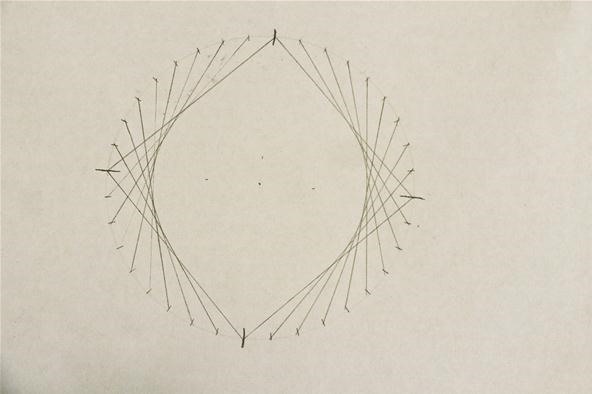
Footstep 5: Add a Cardioid Section
Adjacent, you will add a cardioid section, starting at the 90-caste marking right of the heart'due south "betoken." From here, connect marks by counting past ones for the starting bespeak of the lines, and by counting by twos for the catastrophe points:
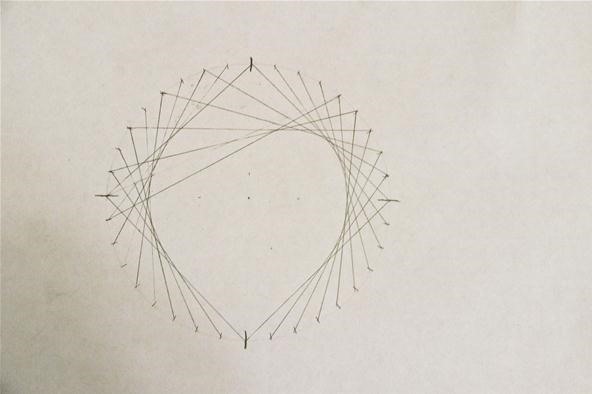
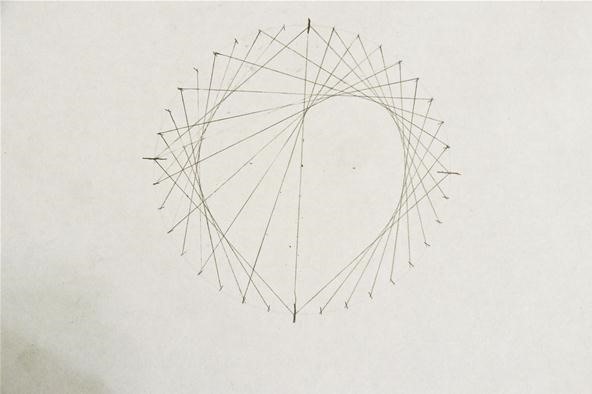
Step 6: Repeat on Other Side
With the cardioid department practical to only half of the circle, you can already see the centre forming. To terminate the "kardioedides," merely repeat the steps for the left side, and your middle is complete!
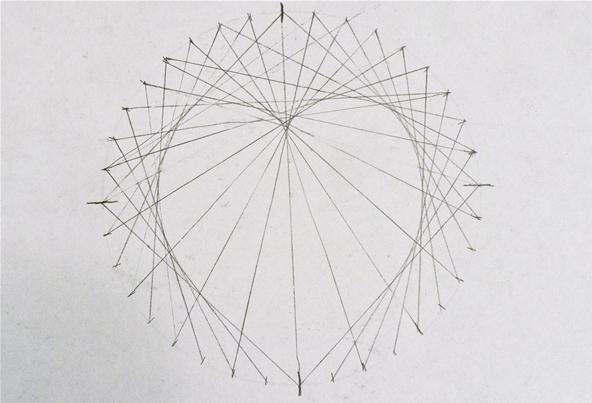
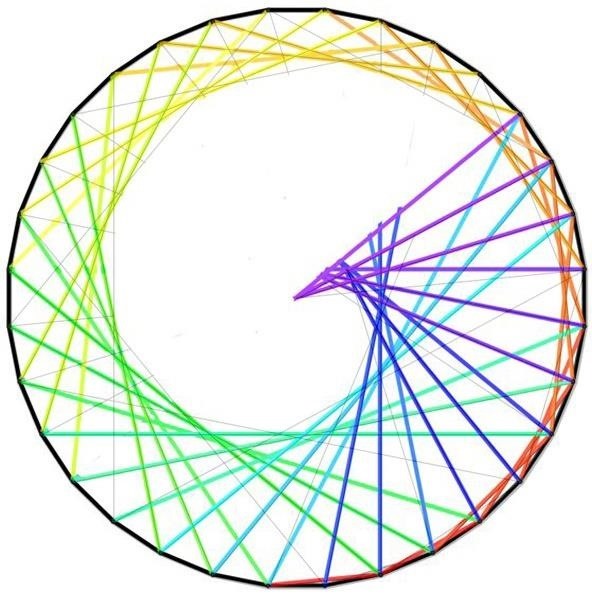
Cool, correct? Finally, from this exercise, I took on one more than claiming: Using a computer program, I attempted to create the same centre design using 59 marks instead of 36. I and then colored it in:
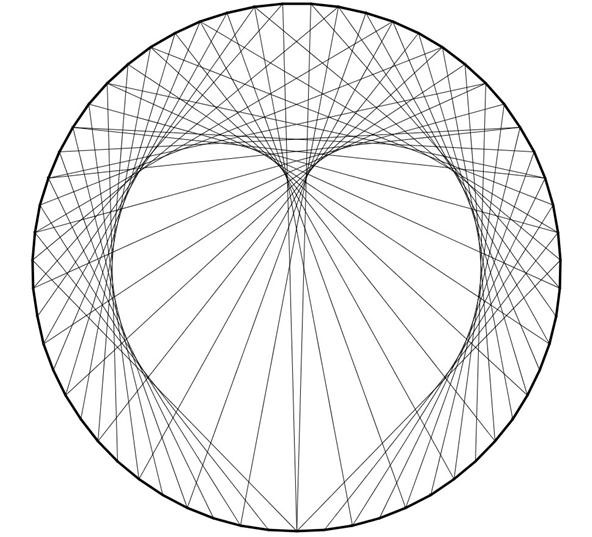
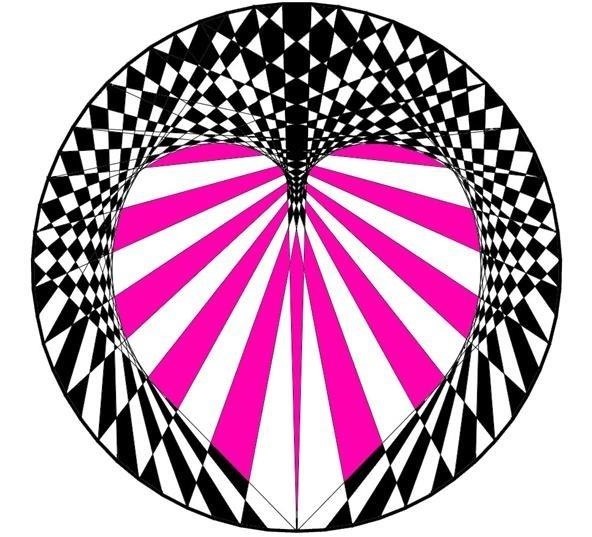
The ideas are pretty fluid when it comes to curves. Now that you're familiar with the basic mathematical curves of the concentric circle, ellipse, and cardioid, you, too, can endeavor your own design ideas. As we've establish, with a simple circle and straight lines (and some math logic), yous can create any number of geometric shapes and combinations. What does your eye meet?
Want to master Microsoft Excel and accept your work-from-habitation job prospects to the next level? Jump-start your career with our Premium A-to-Z Microsoft Excel Training Package from the new Gadget Hacks Shop and get lifetime access to more than 40 hours of Basic to Advanced didactics on functions, formula, tools, and more.
Purchase Now (97% off) >
Other worthwhile deals to check out:
- 97% off The Ultimate 2021 White Lid Hacker Certification Bundle
- 98% off The 2021 Accounting Mastery Bootcamp Bundle
- 99% off The 2021 All-in-I Data Scientist Mega Bundle
- 59% off XSplit VCam: Lifetime Subscription (Windows)
- 98% off The 2021 Premium Learn To Code Certification Bundle
- 62% off MindMaster Heed Mapping Software: Perpetual License
- 41% off NetSpot Home Wi-Fi Analyzer: Lifetime Upgrades

Source: https://mathcraft.wonderhowto.com/how-to/create-concentric-circles-ellipses-cardioids-more-using-straight-lines-circles-0131356/
Posted by: garretttennesers69.blogspot.com
0 Response to "How To Draw Equally Straight Lines In A Circle"
Post a Comment